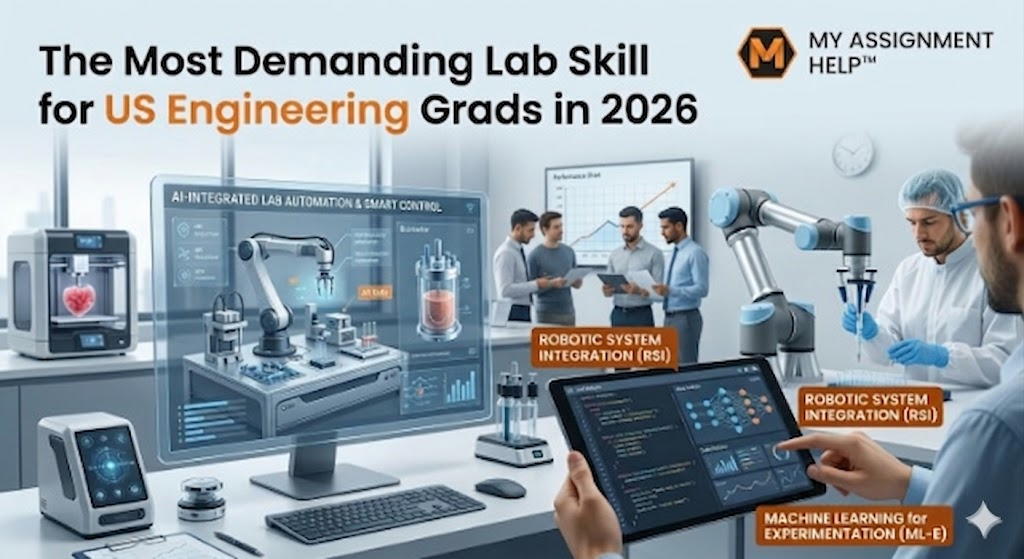
The US engineering landscape in 2026 is no longer defined solely by the smell of ozone in an electrical lab or the grease of a mechanical workshop. As federal investments from the CHIPS Act and green energy initiatives reach full maturity, the “wet lab” has officially married the “dry lab.” For the Class of 2026, one skill has emerged as the undisputed heavyweight champion of employability: High-Fidelity Digital Twin Simulation and Real-Time Data Integration.
While traditional hands-on proficiency remains a baseline requirement, industry giants from Boeing to Tesla are hunting for engineers who can bridge the gap between physical prototypes and their virtual shadows. Whether you are a mechanical, electrical, or civil engineering graduate, mastering the art of the Digital Twin is your golden ticket to the most competitive R&D roles in the United States.
Why Digital Twin Simulation is the #1 Skill in 2026
In 2026, the cost of physical failure is too high for the rapid pace of American innovation. Fortune Business Insights reports that the US digital twin market is projected to reach $11.4 billion this year alone, driven by a desperate need for predictive maintenance and virtual prototyping.
Engineering firms are pivoting toward “Industry 5.0” standards, where human-machine collaboration is seamless. If you can’t simulate a stress test on a bridge using real-time sensor data or optimize a robotic assembly line in a virtual environment before a single bolt is turned, you are essentially speaking a dying language. This shift has made “myassignmenthelp” a common search term for students struggling to balance these complex new simulation modules with their core curriculum. With professional engineering assignment help, many US grads are now focusing their extra time on mastering specific software stacks like Siemens NX, Ansys, and MATLAB/Simulink to stay ahead of the curve.
The Triple Threat: Integration, AI, and Sensors
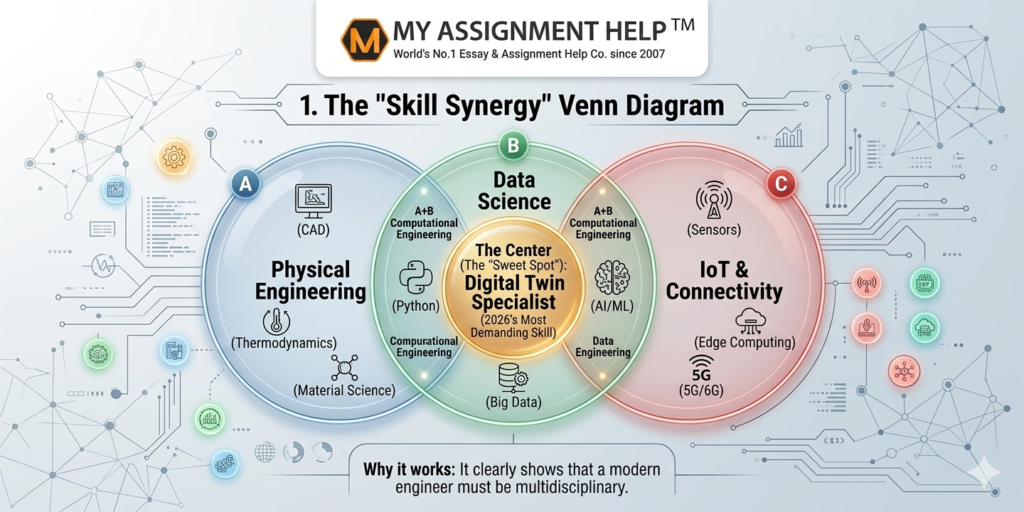
To be considered a master of this “most demanding skill,” a 2026 grad must demonstrate proficiency in three sub-sectors:
- Sensor Fusion & IoT: Knowing how to place and calibrate physical sensors (LiDAR, thermal, acoustic) to feed accurate data into a model.
- AI-Driven Analytics: Using machine learning algorithms to predict when a component will fail based on simulation data.
- Cyber-Physical Security: Ensuring the data link between the lab equipment and the cloud is hardened against digital threats—a major concern for US defense contractors in 2026.
According to research into technology research topics, the intersection of AI and hardware is the fastest-growing area for graduate theses and entry-level job descriptions. Employers are no longer looking for “Mechanical Engineers”; they are looking for “Systems Architects” who can live in both worlds.
Key Takeaways for 2026 Engineering Grads
- Virtual Over Physical: Simulation skills now carry more weight in R&D hiring than basic manual assembly.
- Data is the New Grease: Proficiency in Python and SQL for handling lab data is now mandatory across all engineering branches.
- Industry 5.0 Focus: Companies are prioritizing “human-centric” automation where engineers supervise AI-driven lab workflows.
- Market Growth: The US Bureau of Labor Statistics highlights a 5% growth in traditional roles, but “Hybrid-AI” engineering roles are seeing salary premiums of 15-20%.
Essential Lab Tech Stack for the 2026 Job Market
| Skill Category | Primary Tools/Software | Target US Industries |
| Simulation | Ansys, Siemens NX, COMSOL | Aerospace, Automotive, Defense |
| Data/AI | Python (NumPy/Pandas), MATLAB | Semiconductor, Renewable Energy |
| Control Systems | LabVIEW, PLC Programming | Smart Manufacturing, Robotics |
| Digital Twin | Azure Digital Twins, NVIDIA Omniverse | Infrastructure, Data Centers |
Educational Shift: The “Smart Lab” Curriculum
US universities have spent the last two years overhauling their lab spaces. The “Smart Lab” of 2026 features AR (Augmented Reality) interfaces that overlay digital data onto physical machinery. For students, this means the learning curve has become steeper.
Navigating these multidisciplinary requirements requires a strategic approach to education. Many students find that utilizing specialized resources to handle the heavy lifting of theoretical documentation allows them to spend more “bench time” in the lab mastering these high-end tools. This practical experience is what ultimately separates a “candidate” from a “new hire.”
FAQ Section
Q1: Is traditional lab work (soldering, machining) obsolete?
A: Not at all. However, in 2026, these are considered “foundational” rather than “competitive” skills. You need them to understand the physics, but you need simulation to get the high-paying job.
Q2: Which engineering branch needs Digital Twin skills the most?
A: While Mechanical and Electrical leads the charge, Civil Engineering is seeing a massive surge in “Digital Twin” demand for smart city infrastructure and grid modernization.
Q3: What is the average starting salary for a simulation-heavy engineering role in the US?
A: For 2026, entry-level roles requiring Digital Twin and AI-integration skills are averaging between $92,000 and $115,000, depending on the sector (Aerospace and Semiconductors being the highest).
Author Bio: Sarah Jenkins
Senior Academic Consultant at MyAssignmentHelp
Sarah Jenkins is a veteran Content Strategist and EdTech specialist with over 12 years of experience in the US higher education sector. Currently leading the engineering vertical at MyAssignmentHelp, Sarah focuses on bridging the gap between academic curricula and Industry 5.0 requirements. She has authored over 200 guides on student productivity and emerging technical skills, helping thousands of US engineering graduates navigate the transition from the classroom to the professional lab.
References & Data Sources
- U.S. Bureau of Labor Statistics (BLS) – Occupational Outlook Handbook: Architecture and Engineering (2025-2026 Forecasts).
- Fortune Business Insights: Digital Twin Market Size & Share Analysis, 2026-2034.
- Deloitte Insights: 2026 Higher Education Trends & Engineering Workforce Outlook.
- Pluralsight Tech Skills Report 2026: The Rise of Simulation-Led Design.